
Bitumen is a dense, highly viscous material that must be heated to flow and remain workable. Whether used in road construction, emulsions, or industrial applications, heating plays a critical role in how bitumen is stored, transported, and discharged. In many regions, the term asphalt is also used interchangeably to refer to heated bitumen used as a binder in paving mixes.
Understanding how to heat bitumen correctly is essential to ensuring safe handling, consistent performance, and compliance with storage regulations. This article explores the most common heating methods, typical temperature ranges, and the types of equipment used in modern storage and transport systems.
Why Heating Is Essential for Bitumen and Asphalt
Bitumen and asphalt binder are solid or semi-solid at ambient temperatures. To be pumped, transferred, or applied, they must be heated to a fluid state. This typically means maintaining the product between 140°C and 180°C depending on the grade and climate.
If heating is inconsistent or insufficient, bitumen can thicken, separate, or degrade. This leads to blockages in pumping systems, increased energy use from reheating, and product waste. Continuous temperature control is especially important when storing bitumen for extended periods or transferring it between multiple tanks.
The same principles apply when handling hot asphalt binder. Whether used in production plants or regional depots, asphalt must remain at the correct working temperature to avoid delays or reduced material quality.
Common Heating Methods for Bitumen and Asphalt
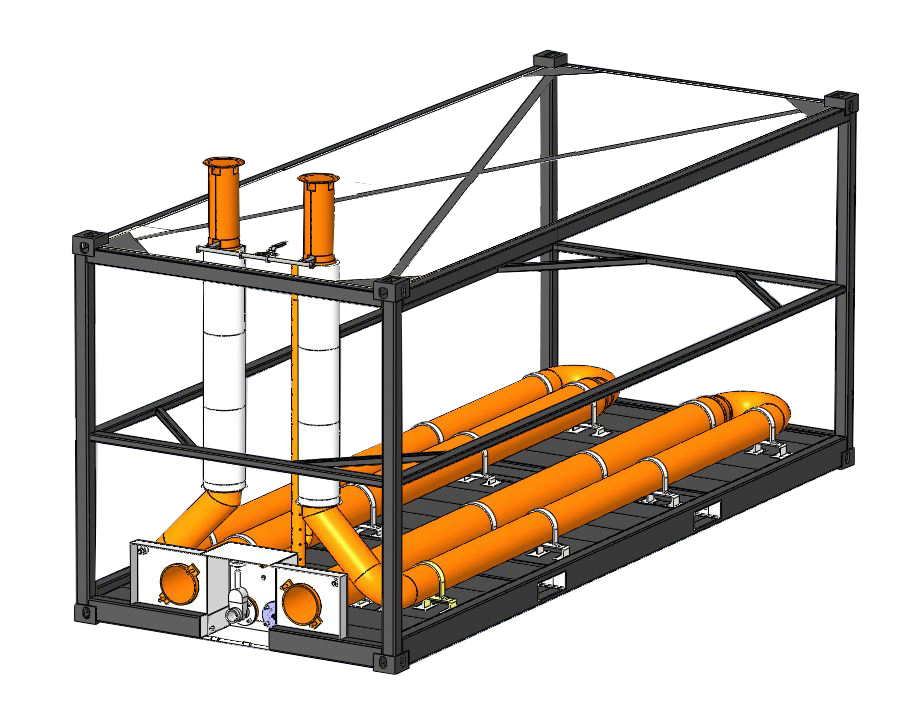
The requirement for bitumen to be heated results in the need for bitumen containers to have inbuilt heating tube configurations. There are three options to heat the containers, direct fire burners, electric element heating, or thermal fluid/steam heating, with TEC’s BitutainerTM Range ensuring high thermal efficiency in all tank variations.
Direct Fire Burners
Using direct fire burners is the most popular method to heat our BitutainersTM, powered by diesel, biodiesel or gas, the burners heat up the flame tubes running through the tank, which transfer the heat evenly and safely to the surrounding bitumen. TEC’s direct fire burner sets can heat a 20ft Shipper BitutainerTM in approximately 10 hours.

Electric Elements
Electric elements utilise an electric resistant assembly to heat the bitumen in the
tank, removing the need for heating fuels. This method of heating is ideal for
product temperature control, where the bitumen must be gradually heated and
maintained at a consistent temperature. Differing
heating elements can be used for different applications, with metal rod assemblies
being robust and durable enough for transportation where frequent handling is
required.
Thermal Fluid or Steam Heating
Thermal fluid or steam heating is often the preferred method of heating in large-scale storage applications due to its efficiency and capability to heat large volumes using one centralised boiler. The tank is fitted with a heating coil, which transfers the heat from the thermal oil or steam to the surrounding bitumen in a controlled and gradual manner. Although well suited to fixed storage applications, when the tank is being used for transport and is frequently disconnected from the boiler, the pipeline requires bleeding upon reconnection to ensure there is no air in the system, adding complications to the transportation of the tank.
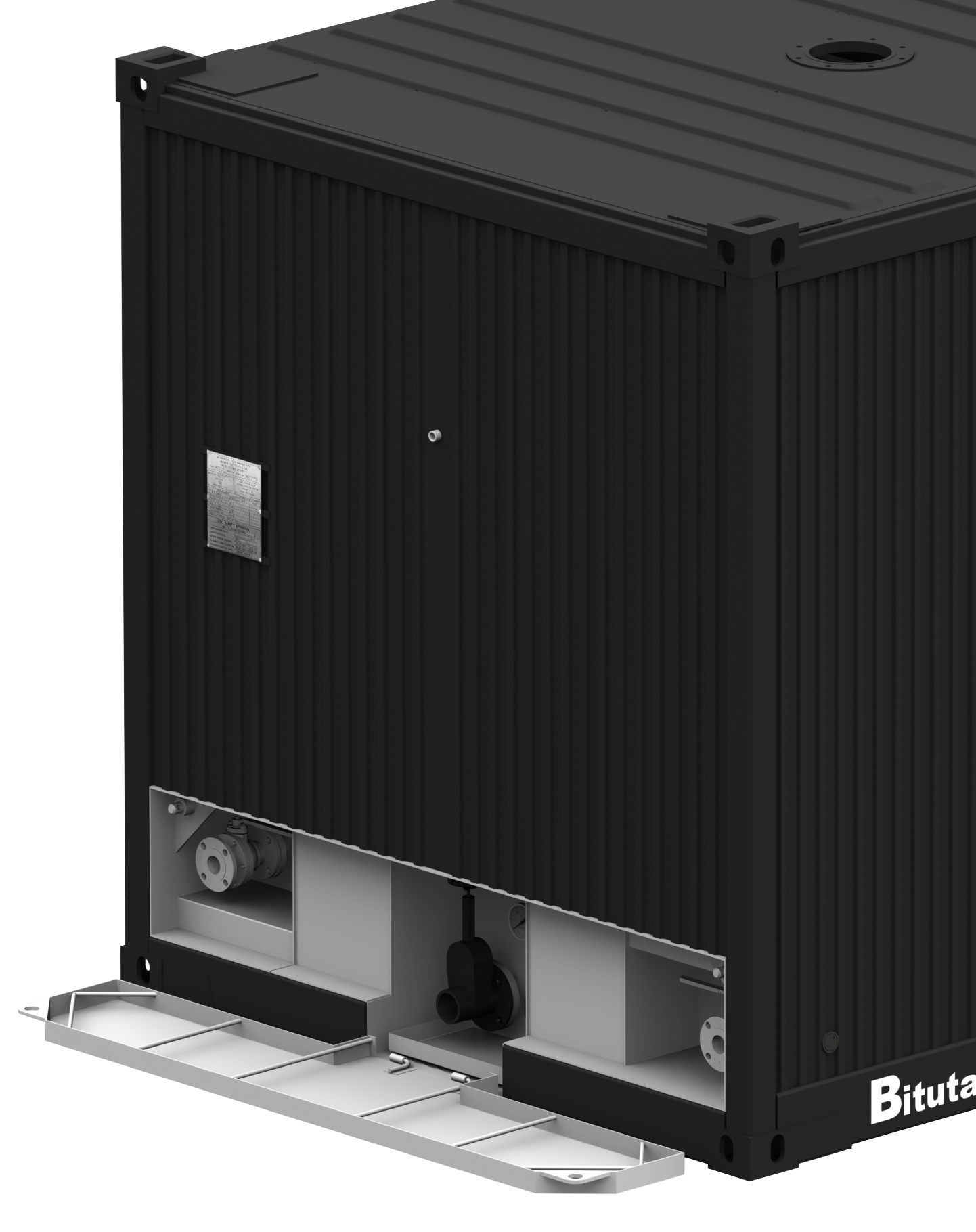
Heated Tank Systems for Safe Storage and Transport
Bitumen heating is not only about reaching the right temperature. It is also about maintaining that temperature over time to prevent unnecessary reheating, energy waste, and material degradation.
TEC’s insulated and heated containers are designed to store and transport hot bitumen and asphalt efficiently. These systems feature:
Integrated electric or thermal oil heating
Fully insulated, double-walled construction
Temperature monitoring and control options
Intermodal compatibility for road, rail, or sea transport
Our containerised tanks are suited for depot use, temporary asphalt storage, and long-distance transport of hot bitumen. They also reduce the need for site-based heating systems, making them ideal for phased or remote infrastructure projects.
To compare storage system types, read our modular vs fixed bitumen storage blog.
Energy Efficiency and Operational Safety
Heating bitumen efficiently means more than just applying heat. It requires a storage system that limits heat loss, maintains stable internal conditions, and integrates safely with discharge equipment.
Insulated asphalt storage tanks help reduce the energy required to maintain working temperatures. Automated heating control reduces the risk of overheating or thermal shock, protecting both the product and the container.
Safety systems such as pressure relief valves, temperature alarms, and bunded tank bases are also essential when handling hot bitumen. These features help operators comply with industry regulations and minimise environmental and operational risk.
Choosing the Right Heating System for Your Operation
Every project has different requirements depending on the bitumen type, location, and storage duration. Heating methods must be chosen to match the operational needs of the site while protecting product quality and maintaining safety.
TEC’s heated tank systems are built specifically for bitumen and asphalt handling. Whether for bulk storage, seasonal distribution, or long-distance transport, our containers offer a compliant, efficient, and mobile solution.