
In bitumen logistics, transport method influences more than just budget line items. It shapes how efficiently projects run, how safely materials are handled, and how sustainable operations can become over time. While upfront pricing often guides initial decisions, the total cost of ownership, including transport, heating, compliance, and operational downtime, tells a more complete story.
This blog compares the three most common transport formats in use today: steel drums, bitumen tank trailers, and modular Bitutainers™. Each method has different use cases, but only one delivers consistent value when long-term operational costs are factored in.
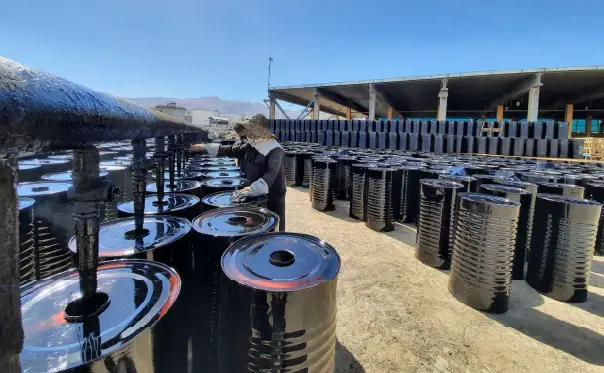
Steel Drums: Economical to Purchase, Expensive to Run
Steel drums are widely used in certain markets due to their affordability and availability. They require no specialised infrastructure and are easy to distribute across remote sites or short-haul deliveries. However, once in use, drums quickly present hidden costs.
They provide no insulation, which means bitumen inside must be reheated in full before use. Thermal losses are high, and the process is time-consuming. Manual handling also increases labour hours and raises health and safety risks. Drums are rarely reused due to contamination and cleaning difficulty, and the residual waste left in each unit increases product loss across a shipment.
In practical terms, drums often become the most expensive transport option when total usable volume, fuel for reheating, and waste are considered together.
Explore more in our article: Drum Transportation vs Bitutainer™
Bitumen Tank Trailers: Practical but Limited
Tank trailers are a reliable option for high-frequency delivery over short distances. With integrated heating systems, they allow bitumen to be moved directly between production terminals and job sites, which reduces time between loading and application.
However, their limitations appear quickly when flexibility is needed. Tank trailers are fixed to road operations and require licensed drivers at all times. Once unloaded, the trailer returns to its depot without carrying additional payload, increasing empty run costs. Maintenance is ongoing, and downtime can disrupt site schedules. Route constraints and permit requirements further restrict adaptability.
While effective in structured supply chains, trailers struggle with cross-border operations, intermodal transport, or projects where distance and repeat mobility are key.
Bitutainers™: A Lower-Cost Option Over Time
TEC’s Bitutainer™ range offers a modular solution for bitumen logistics that balances cost, compliance, and control. Designed for seamless road, rail, and sea movement, Bitutainers™ allow operators to reduce handling steps, eliminate transfer-related heat loss, and streamline project logistics.
They can be used in multiple ways depending on transport type and regulatory need:
The Shipper Bitutainer™ is ideal for cold transport where heating can occur at the discharge point.
The ADR Bitutainer™ supports road and rail transit across UK and EU networks with full regulatory compliance.
The IMDG Bitutainer™ is certified for international maritime movement of heated and hazardous materials.
Bitutainers™ offer strong thermal retention through integrated insulation and optional heating systems. Unlike trailers, they do not require vehicle commitment and can be stacked or stored on-site until needed. Unlike drums, they are designed for repeat use, reducing both environmental impact and per-trip cost.
For details on regulatory compliance, visit: Regulations for Bitumen Transport
Lifecycle Cost Comparison
| Transport Type | Upfront Cost | Ongoing Cost | Compliance | Scalability | Waste / Loss Risk |
|---|---|---|---|---|---|
| Drums | Low | High | Low | Low | High |
| Trailers | Medium | Medium-High | Medium | Medium | Medium |
| Bitutainers™ | Medium | Low | High | High | Low |
Drums
Trailers
Bitutainers™
This comparison reflects average usage across storage, heating, and transport workflows. For projects involving repeat movement, long distances, or mixed transport modes, Bitutainers™ consistently outperform other formats on lifecycle cost and reliability.
Smarter Logistics Through Smarter Equipment
Bitumen transport does not end at procurement. Choosing the right container influences reheat cost, handling risk, and operational downtime over years of use. As more contractors look to optimise supply chains, the shift toward modular and reusable logistics formats is increasing.
Bitutainers™ offer a practical, compliant, and scalable solution for modern infrastructure work. Whether you’re moving bitumen across state lines or preparing for an international tender, TEC can help you identify the most effective transport model for your route and material.
Shipper Bitutainer™
Shipper Bitutainer™
ADR/RID Bitutainer™
Transport
ADR/RID Bitutainer™
Transport
IMDG Bitutainer™
Liquid Transport
IMDG Bitutainer™
Liquid Transport